Stand in the lighting aisle of any DIY shop and you'll see the same thing: boxes shouting about watts. 60W replacement. 100W equivalent. 4W LED. It's tempting to grab whichever number sounds like the bulb you're taking out. That habit made sense when every bulb had a filament inside it, but it now leads people to buy lights that are either too dim to read by or bright enough to feel like a changing room. The fix is simple. Watts tell you what a bulb costs to run; lumens tell you how much light it puts out. Learn to read the second number and choosing for a UK living room, kitchen or landing becomes a five-second decision.
Wattage measures energy, not brightness
A watt is a unit of power — the rate at which a fitting draws electricity. On an old incandescent bulb, most of that power left as heat rather than light, which is why a 60W bulb felt warm and why a room full of them was expensive to run.
LEDs changed the maths. An LED converts far more of the electricity it uses into visible light, so it can produce the same output as a 60W filament bulb while drawing a small fraction of the power. That's why a "60W equivalent" label on an LED box is a comparison with the past, not a description of what the bulb actually consumes.
Wattage still matters, just for different reasons. It governs running cost, how much heat the fitting has to cope with, and whether a lamp or shade rated to a maximum wattage is being used sensibly. If you're replacing bulbs inside an enclosed fitting, a lower-wattage LED is usually the cooler and gentler choice — but stay within the maximum rating printed on the fitting itself, and ask a qualified electrician if you're unsure about anything involving fixed wiring or dimmer switches.
Lumens: the number to compare
Lumens (lm) measure the total amount of visible light a bulb produces. Two bulbs with the same lumen figure give you roughly the same amount of light, whatever their wattage. That single sentence is the whole trick.
As a rough translation from the old world, a 40W incandescent gave around 400–450 lumens, a 60W around 700–800, and a 100W somewhere near 1,300–1,500. Modern LEDs reach those figures at a tiny wattage, which is why a good 8–9W LED can comfortably replace the 60W bulb in your table lamp.
One more term is worth knowing: lux. Lux is lumens spread over a surface — light arriving at the spot you're trying to illuminate. Brightness as your eye experiences it depends on lux, which is why the same bulb in a small box room feels far brighter than in a double-height hallway.
Lumens per watt: the quick quality check
Divide a bulb's lumens by its watts and you get its efficacy — how hard it works for the electricity it uses. It's the fastest way to judge an LED on the shelf.
- Around 70–80 lm/W: basic, often cheap LEDs. Fine for cupboards and utility spaces.
- Around 90–110 lm/W: solid everyday performance for most rooms.
- 120 lm/W and above: efficient bulbs worth paying a little more for, especially in fittings that stay on for hours.
Higher efficacy also means less heat, which is kinder to enclosed shades and to the electronics inside the bulb itself.
Matching lumens to the room
There's no single correct number, but a room-size rule of thumb gets you close. Estimate the area in square metres and allow roughly 100–150 lumens per square metre for relaxed living space, 200–300 for general purpose rooms, and 300–500 where you're reading, cooking or working.
Living rooms
A 4m × 4m room is 16 square metres. At 120 lumens per square metre you're aiming for around 1,900 lumens in total — spread across a ceiling fitting, a floor lamp and a couple of table lamps. Layering light like this almost always beats one very bright pendant, because you can dim or switch off what you don't need.
Kitchens and workspaces
Worktop lighting needs to be brighter and closer. Under-cabinet strips and spotlights aimed at the surface matter more than ceiling output, so don't judge a kitchen by the total lumens in the room alone.
Bedrooms, hallways and bathrooms
Bedrooms are usually fine at the lower end, especially with dimming. Hallways and stairs benefit from a slightly cooler, more even light so you can see edges clearly. In bathrooms, choose fittings rated for the zone they're installed in — moisture-rated around showers and baths.
What lumens don't tell you
Two bulbs with identical lumen ratings can look completely different once they're in the room.
Beam angle
A spotlight squeezes its output into a narrow cone, so the same 400 lumens looks far more intense on a wall than a 400-lumen bulb spreading light in every direction. Compare beam angles when you're swapping one spot for another.
Colour temperature
Measured in kelvin, this is the warmth or coolness of the light. Around 2700K feels cosy and suits living rooms and bedrooms; 3000–3500K is a good middle ground; 4000K and above reads crisp and clinical, which works well in kitchens, garages and utility rooms. Keep it consistent within a room unless you deliberately want contrast.
Dimming and flicker
If you want to dim a bulb, both the bulb and the dimmer need to be compatible. Many LEDs work best with a trailing-edge dimmer, and cheap bulbs can buzz, flicker or refuse to dim smoothly. Buy dimmable LEDs from a brand you trust, and if a dimmer needs replacing, use a qualified electrician.
Choosing in the shop
- Work out the lumens you need — either match the bulb you're replacing or use the room-size rule.
- Decide on colour temperature before you look at anything else.
- Check the cap and the physical size: E27, B22, GU10 and so on. Many LED replacements are wider than the old bulbs they replace, which matters inside shades and enclosed fittings.
- Compare lumens per watt, not price alone.
- Confirm the bulb is dimmable if the circuit is on a dimmer.
The short version
Ignore the big wattage number on the front of the box and look for the small print: lumens, kelvin, and the word "dimmable" if you need it. If you're replacing a bulb you liked, note its lumens before you throw it away — that figure is the one you're trying to match. And if a room still feels wrong after the swap, adjust the layers rather than reaching for a brighter bulb. More light in the right place beats more light everywhere.
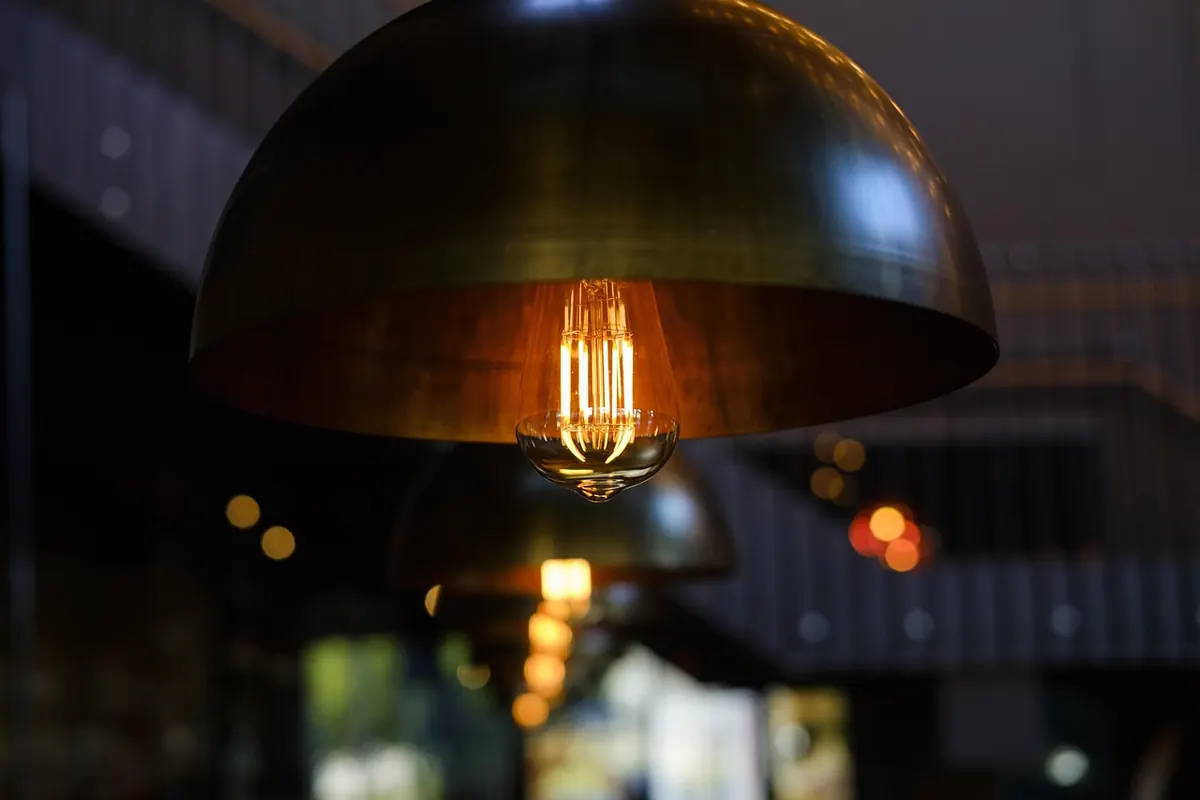
Photo: Bru-nO / Pixabay